

By Hope Good
During the early decades of the 20th century, national parks offered visitors a very different kind of wildlife experience. In Yellowstone and Glacier National Parks, bears were not simply animals to be observed—they were an attraction.
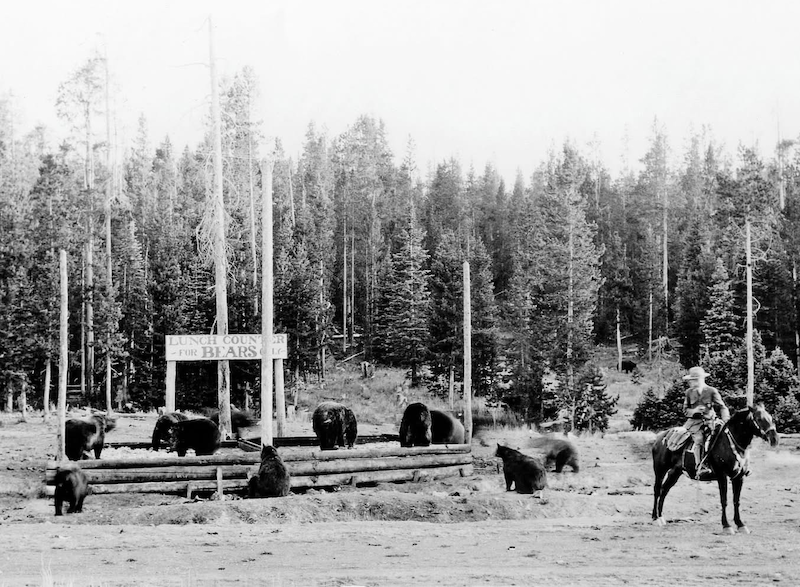
Park officials and concessionaires promoted bear viewing to increase attendance, revenue, and visitor enjoyment. Garbage from hotels and restaurants was hauled to designated open-pit dumps and concrete feeding platforms, where crowds gathered in bleachers to watch grizzly and black bears feed. Famous porcelain-enamel signs even proclaimed, “Lunch Counter for Bears Only.”
The spectacle drew hundreds and sometimes thousands of visitors. At night, armed park rangers on horseback helped manage the crowds as bears descended on the garbage.
The entertainment, however, came at a serious cost. Bears quickly learned that humans meant easy food. Some abandoned natural foraging and began gathering along park roads, where tourists stopped their automobiles to watch, photograph, and sometimes hand-feed them through open windows. The resulting traffic tie-ups became known as “bear jams.”
For roughly 50 years, beginning around the 1910s, roadside bear encounters and feeding were a familiar part of the national park experience. But bears conditioned to human food became increasingly dependent on unnatural food sources. Property damage and aggressive encounters increased, sometimes resulting in serious injuries and deaths.
By World War II and the decades that followed, park management began eliminating public bear-feeding spectacles. Open garbage dumps and artificial feeding were eventually prohibited, culminating in the complete ban on open dumps and intentional bear feeding by 1970.
What once drew crowds as entertainment ultimately became a lesson in wildlife conservation. Today, bears are protected as wild animals, and feeding or intentionally approaching them is strictly prohibited.