


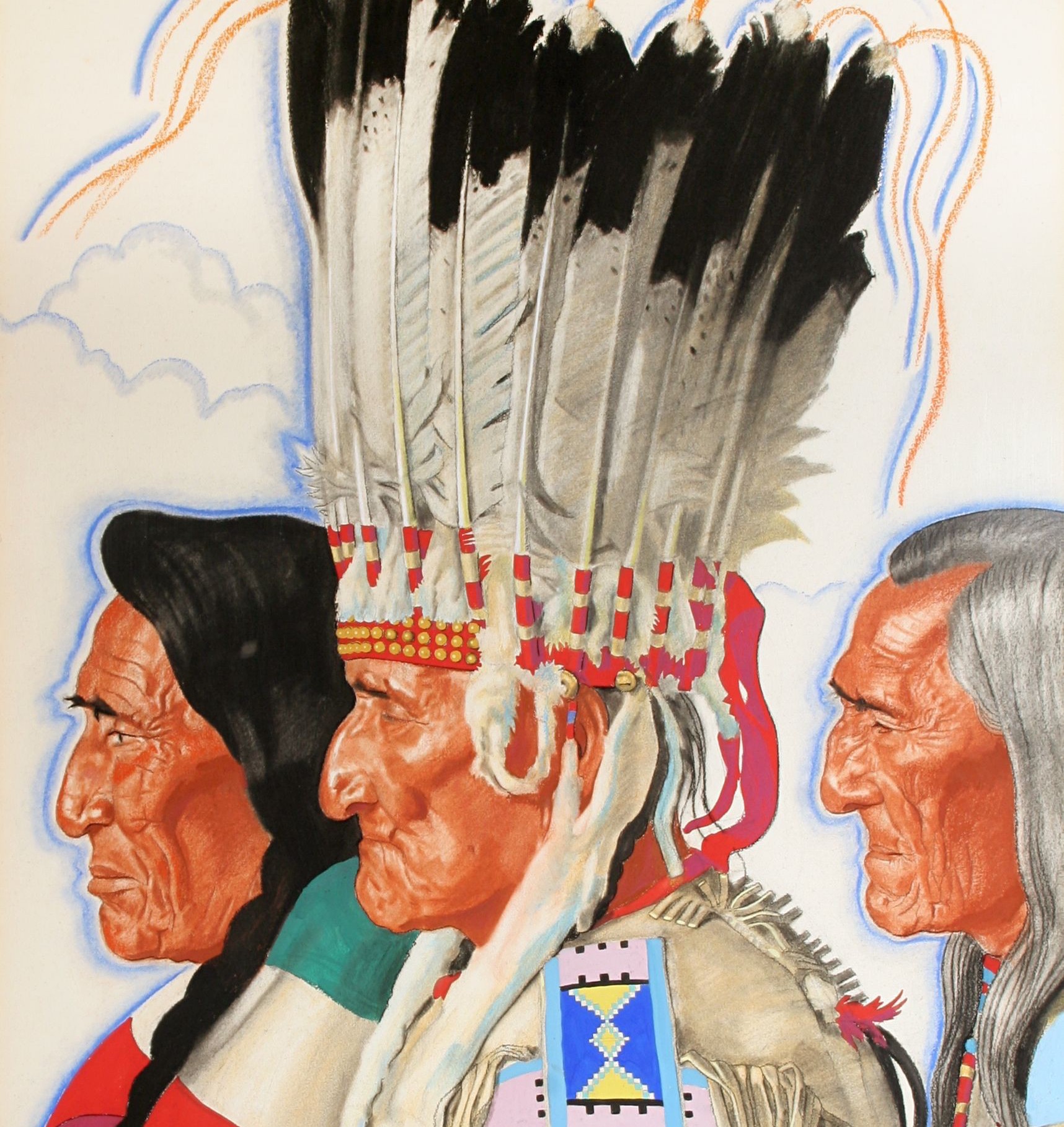
By Suzanne Waring
Portraiture has been part of Peter Reiss’s life since childhood. His grandfather was Winold Reiss, the famous artist who came to Browning, Montana, many summers from 1920-1948 to make and resume friendships with Blackfeet/Blackfoot families. Reiss had read and was mesmerized during his childhood in Germany by Karl May’s incredible books of the West and the Indigenous People who lived there. Creating a memorial through portraits to, most specifically, the Indigenous People of the Great Plains became his primary goal in life. At first the Blackfeet were reticent about sitting for a painting. From his very first visit to Browning, Reiss communicated that he wanted to help future Indigenous People remember their heritage by creating this permanent living memorial to them. This struck a chord with many members of the two nations. Consequently, he painted many portraits, including those warriors and Holy men and women who remembered the period that bison were hunted from horseback.
Louis W. Hill, son of the Great Northern Railroad magnet, J. J. Hill, learned about Reiss’ work and sponsored as many as 300 Blackfeet/Blackfoot portraits over a span of thirty years. While also serving as a tribute that kept the characterization of the cultures alive, the majority of the portraits were used from 1928 to the late 1950s as a primary marketing tool for the railroad’s “See America First” campaign. The portraits were used in marketing materials, such as brochures, menus in the dining cars, posters, calendars, and playing cards. They encouraged travel to Glacier National Park via the railroad.
There has been some discussion among experts of Reiss’ Blackfeet portraits concerning the clothing and accessories that are depicted. Individual families had representative designs and colors, but in the portraits the accessories on occasion didn’t match that particular person’s family. Peter Reiss explained that the economic situation of a person who had consented to “sit” for a portrait often didn’t merit buying or creating new family designs. To look their best, individuals would often borrow from others.